Introduction
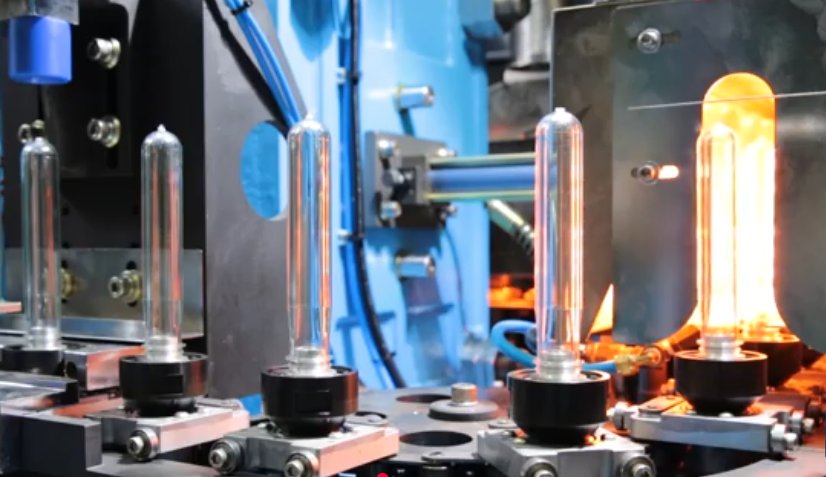
If you run a SIPA rotary machine, you know the feeling. Heat fluctuations aren’t just a minor annoyance. They shut your line down. They turn good product into scrap. So we built a replacement lamp that stops that headache for good. These are certified Sidel-compatible infrared lamps. They’re a direct fit, with the exact power you need. You can swap them in and get back to work—no rewiring, no recalibration. Just a simple swap.
Power, Voltage, and Fit: Why the Details Matter
Here’s the thing:the wattage has to match, plain and simple. Your SIPA heater zone is tuned to a specific thermal load. If the lamp’s power is off, the controller fights to compensate, and you get those wild swings in bottle temperature. We match the exact wattage and voltage your machine expects, so the PID loop stays calm and steady. And the physical fit? That’s just as critical. We hold the length and diameter to tight tolerances. Why? Because even a tiny shift throws off the reflector alignment and the focal point on the preform. That means uneven heating. Our lamps are dimensioned to keep the original thermal geometry intact.
What’s Inside: Quartz, Coating, and a Solid Connection
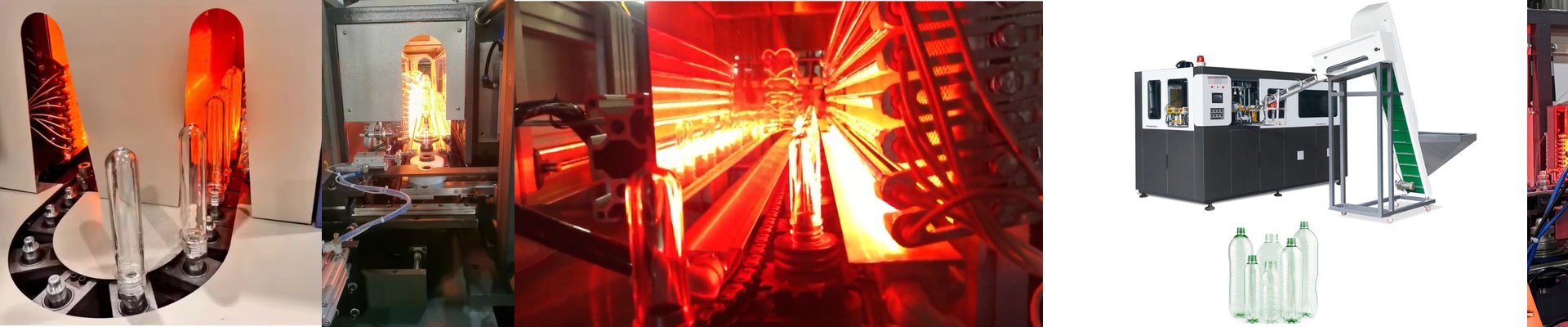
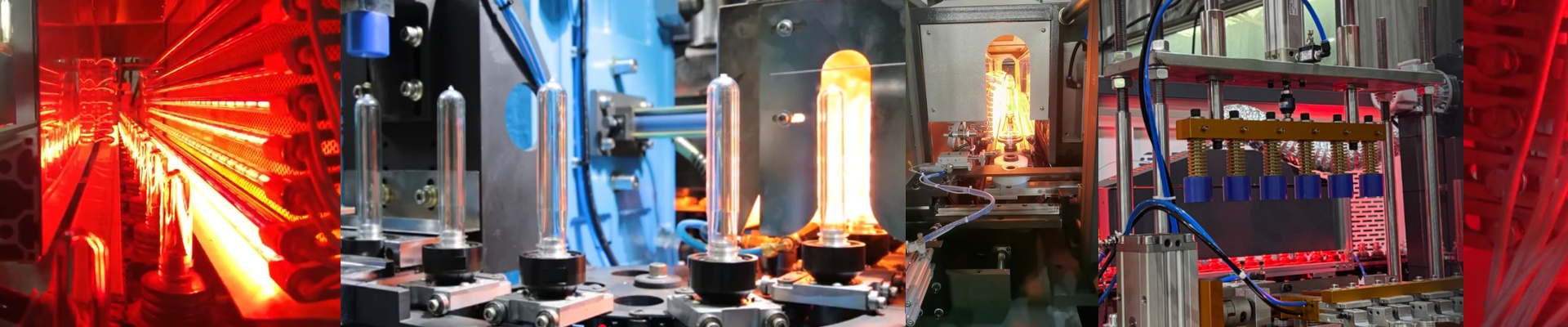
These are shortwave infrared halogen lamps, built on a quartz tube. Quartz is tough—it handles rapid heating and cooling, and it stays consistent, cycle after cycle. The internal halogen cycle keeps the filament stable, which means the output doesn’t drift over the life of the lamp. The tube also has an infrared-reflective coating. It pushes energy back onto the filament, raising the effective temperature and focusing the heat where it’s needed. That gives you more heat density in a compact size—perfect for the tight spaces on a rotary machine. And the connector end? It’s engineered to fit SIPA machines, using a standard high-temperature interface. It gives you a solid mechanical and electrical connection, so the lamp truly is a drop-in replacement.
On the Line: Stability You Can Count On
On a SIPA rotary, you need heat that repeats, every single cycle. These certified lamps deliver stable output, so your heating profile stays true. And the installation? It’s fast. Swap the lamp, close the door, and you’re back in production. But let’s be real: higher heat density means you need proper cooling. Keep the airflow steady and the reflector clean. If you don’t, heat builds up, and the lamp won’t last as long. For the engineers running SIPA, this setup removes the usual variables that cause heating swings—power mismatch, poor contact, and geometry that’s off.
The Payoff: Simple Swap, Steady Results
For SIPA rotary users, these lamps deliver stable heating by taking power mismatch and contact issues off the table. Installation is a straightforward swap, so changeover is quick. The compact design fits tight footprints without any rework. Just remember the trade-off: that high heat density needs attention. Keep the cooling in good shape and the reflector clean. If airflow gets restricted, the lamp runs hotter, and its life drops. When you run these lamps within spec, you get consistent heating, fewer alarms, and maintenance you can actually plan around.