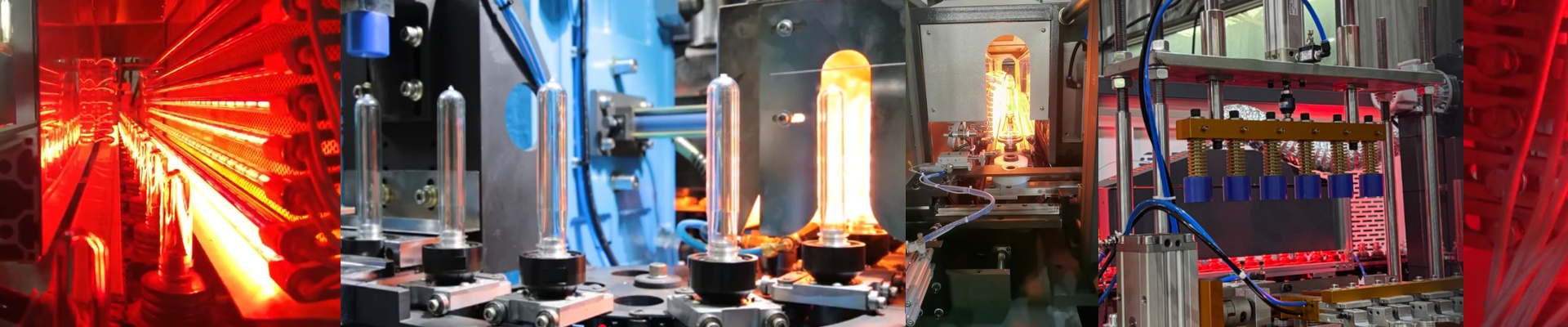
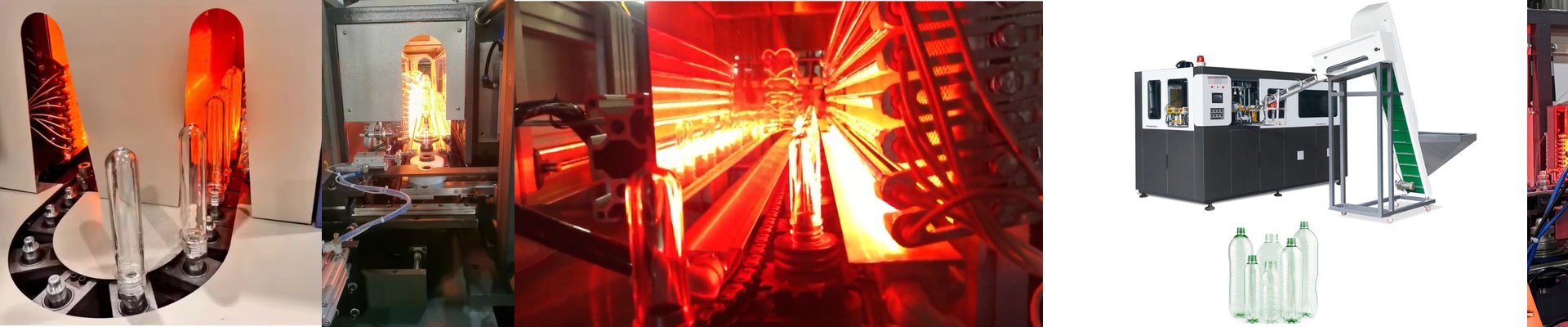
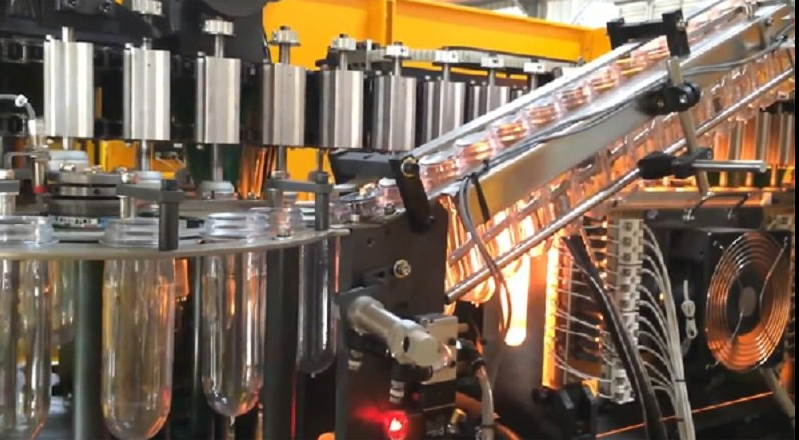
On the floor, the HyPET 225 runs hot, fast, and expensive—especially when the heating tunnel starts drifting. Under-heated preforms give you weak stretch, thick spots, and scrap. Over-heated preforms give you crystallization, haze, and jams. When lamp output fades, the whole line pays for it in scrap and restart time.
What matters, technically
The Husky HyPET 225 heater bulb is a short-wave infrared emitter built to match the machine’s thermal profile, not just its socket. We spec a quartz envelope and a halogen filament that can keep up—rapid response, stable output, day after day in a high-cycle blow molding tunnel. It runs on the same voltage and geometry as the OEM, with an R7s connector and the correct overall length so it drops in without modifying holders or reflectors. That gives you predictable heat density across the preform wall, so you can hold tight temperature windows—exactly what consistent stretch blow molding demands.
Why it works on this machine
This bulb is engineered for the HyPET 225’s heating zone demands, where preform heating is the pacing step. With stable output, the heating curve stays repeatable, so you cut scrap from off-spec bottles and stop chasing re-tunes every time you swap a lamp. Energy use comes down because the emitter hits set temperature quickly and holds it without hammering the cycle. In practice, plants running this spec see fewer lamp changes per year, less downtime for replacement, and fewer restart scrap events.
What you need to keep straight
Installation is straightforward—but lamp alignment and reflector cleanliness matter. Even a small misalignment changes the heating pattern and can drive uneven preform temperatures. Handle the quartz bulb by the base only. Oil or fingerprints on the envelope can create hot spots and shorten life. Plan replacement during scheduled stops, not in a rush after a jam. That way you can verify temperature uniformity before you restart the line.