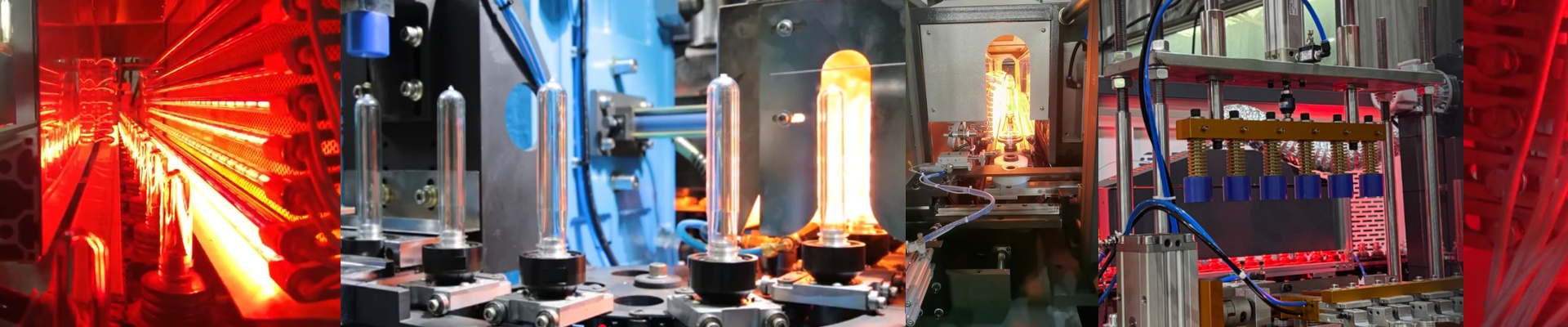
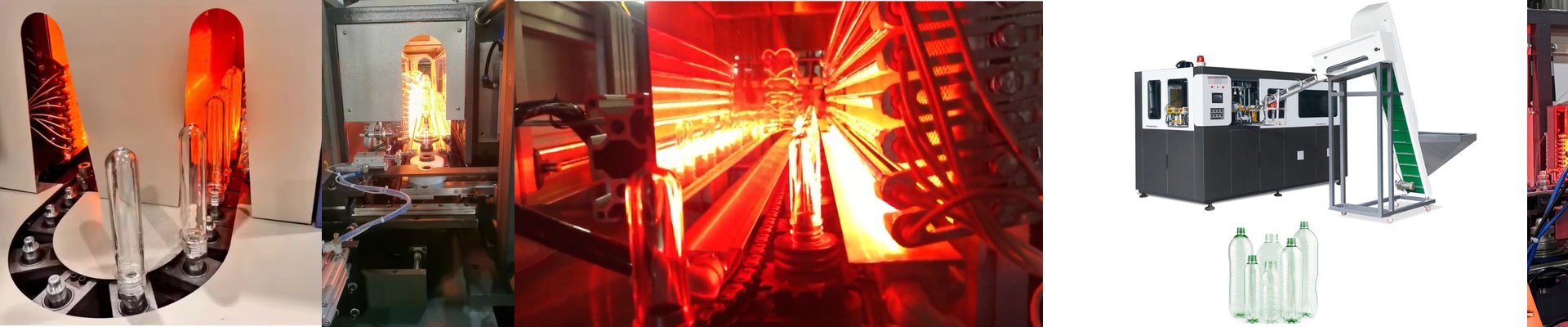
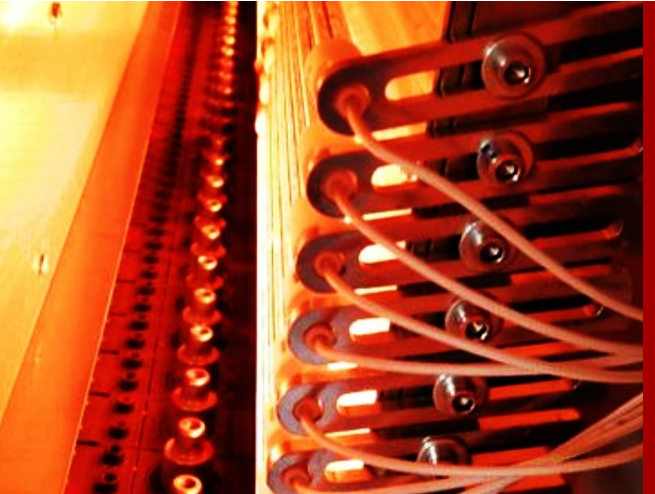
When the heating tunnel on your Sacmi line starts drifting, you don’t get a heads-up—you get scrap. Preforms come out uneven, the blow station suddenly fights the material, and the quality team starts second-guessing the whole run. In stretch blow molding, the heater isn’t a background player. It sets the temperature profile, and the profile sets the cycle. We built the Sacmi blow molding heating lamp to do one thing: drop into the original infrared slot and deliver repeatable heat distribution, survive plant conditions, and plug in without rewiring or re-engineering the tunnel.
What matters, technically
Infrared heating for PET preforms comes down to matching wavelength, power density, and control response to the polymer’s absorption curve. Our Sacmi blow molding heating lamp uses short-wave infrared (tungsten-halogen) emitters in a quartz envelope. That combo gives fast warm-up and crisp response to setpoint changes—exactly what you need when you’re tuning a multi-zone heating tunnel and trying to keep output consistent across shifts. Here are the engineering points you can verify on the label and in the specs:
- **Wavelength focus:**Short-wave output concentrated where PET absorbs efficiently, so you heat the preform wall without scorching the surface.
- **OEM-matched electrical interface:**The lamp is built to match Sacmi’s common lamp base and connector conventions, including R7s-type terminations used across many heating modules. Swap lamps without modifying sockets or routing new cables.
- **Power and voltage alignment:**We offer ratings aligned to Sacmi machine voltages and heating zone power plans. Matching voltage and wattage keeps the control loop behavior consistent—no surprise current draw, no PID retuning.
- **Mechanical envelope:**Length, diameter, and mounting geometry match the original lamp footprint so the emitter sits in the same focal plane inside the reflector assembly. If the lamp doesn’t sit where the optics expect it, the heating pattern shifts—even if the wattage is spot on. That’s why we specify lamps by machine family and heating section, not with some vague “fits most” claim.
Why it works where it counts
You run a Sacmi blow molder—Matrix, Contiform, or HyPET—because it’s engineered as a system. The heating tunnel, the blow stations, the timing, and the pressure are all calibrated to work together. When the heating lamp ages, output drops and the profile drifts. You compensate by nudging zone temperatures up, and then you start seeing crystallization, weak necks, or inconsistent wall thickness. Our Sacmi blow molding heating lamp puts the intended heating performance back where it belongs. In practice, that shows up as:
- **More stable preform heating:**Tighter temperature spread across the preform body cuts variability at the blow station, which means fewer rejects from splits, stress marks, or weak stretch.
- **Consistent start-ups:**Fast warm-up and repeatable output mean less time chasing setpoints after a changeover and fewer scrapped bottles at the beginning of the run.
- **Fewer lamp-related stops:**We build the lamp to handle repeated thermal cycling and the airflow and humidity conditions inside a blow molding cell. That translates to longer intervals between replacements—and fewer production interruptions.
- Predictable energy use:When the lamp output matches the original design, the machine doesn’t have to over-drive the zone to hit temperature. You avoid the hidden energy cost of “just turning it up” to compensate for aging emitters. And for maintenance and spares planning, the big win iscompatibility by design. We align the lamp to Sacmi machine families, including:
- Sacmi Matrixblow molders
- Sacmi Contiformseries
- Sacmi HyPETsystems This isn’t a guess. It’s a catalog built around the machine-specific heating section, the socket type, the voltage, and the physical envelope. Spec the correct lamp for your exact machine and heating zone, and the replacement is a straight swap.
The details that matter on the floor
Even the best lamp is only as good as the conditions it runs in. Here are the real-world points that make the difference. **Installation and alignment:**The lamp has to sit squarely in the socket and be positioned exactly where the reflector expects it. If it’s even slightly off-axis, heat distribution changes and you’ll see edge-to-edge differences in heating. Always check the holder, the reflector condition, and the alignment pins when you replace. **Reflector condition drives results:**Over time, reflectors oxidize and lose reflectivity. A new lamp behind a tired reflector will underperform. If you’re swapping lamps and still seeing poor heating, inspect the reflector and replace it if it’s discolored or pitted. **Controls and PID tuning:**If you’ve been running with an aged lamp, operators may have bumped the zone setpoint to compensate. After installing the new lamp, reset the zone setpoints to the original machine targets and let the PID re-stabilize. Otherwise, you risk overheating and wasting energy. **Thermal management:**Keep airflow and cooling as the machine specifies. Too much draft can cool the surface while the interior is still cold; too little can let heat build and drift. The lamp performs best when the heating tunnel environment matches the machine’s designed thermal balance. If you want fewer stops and steadier heating on your Sacmi blow molder, start by confirming the exact lamp type for your Matrix, Contiform, or HyPET heating zone. Spec it to the machine, not the general category. That’s how you get repeatable output, predictable changeovers, and fewer quality surprises.